How Smart Manufacturing Builds Long-Term Reliability
.jpg)
In today’s industrial landscape, reliability is no longer a byproduct of manufacturing—it is a deliberate outcome. Customers expect consistency, durability, and performance over time, not just at the point of delivery. This shift has pushed manufacturers to rethink how products are designed, built, and validated. At the center of this transformation lies smart manufacturing—not as a buzzword, but as a disciplined approach to building systems that deliver reliability at scale.
What is Smart Manufacturing
Smart manufacturing is often misunderstood as a purely digital or automated concept. In reality, it is a holistic approach that integrates design intent, production discipline, process control, and operational consistency. It is about creating a manufacturing ecosystem where every stage—from raw material to finished product—is aligned with precision and purpose.
At its core, smart manufacturing ensures that variability is minimized, repeatability is achieved, and quality is embedded into the process rather than inspected at the end. It brings together structured workflows, standardized processes, and controlled environments to ensure that each product meets defined performance benchmarks. More importantly, it creates a system where manufacturing is not reactive, but predictive and preventive in nature.
How Technology Empowers Smart Manufacturing
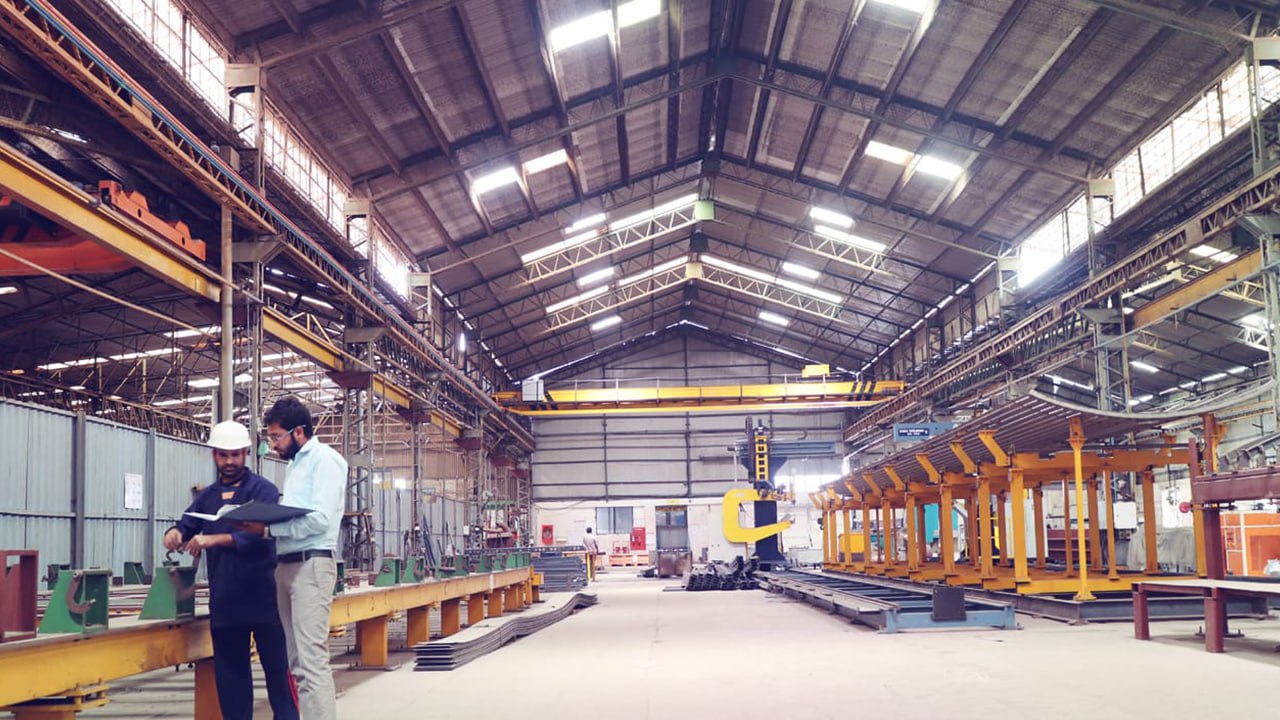
Technology plays a critical role in enabling smart manufacturing, not as an end in itself, but as a means to achieve control, precision, and consistency. Modern manufacturing facilities rely on advanced machinery, well-planned infrastructure, and calibrated tools to ensure that every operation is executed within defined tolerances.
From CNC machining and robotic welding to precision fabrication and automated assembly lines, each technology contributes to reducing human error and improving repeatability. Infrastructure planning—such as optimized plant layouts, material flow systems, and controlled environments—ensures efficiency and minimizes disruptions.
Equally important are robust quality control processes. These include in-process inspections, dimensional verification, load testing, and performance validation at multiple stages of production. By integrating quality checks within the manufacturing cycle, rather than treating them as a final step, manufacturers ensure that defects are identified and corrected early, preserving both time and resources.
Smart Manufacturing Beyond Technology
While technology enables smart manufacturing, it does not define it. The real strength lies in the discipline of execution. Best practices such as standard operating procedures, lean manufacturing principles, and continuous improvement frameworks form the backbone of reliable production systems.
Methodologies like Kaizen encourage incremental improvements that, over time, lead to significant gains in efficiency and quality. Strict testing protocols ensure that products are not only built right but also perform reliably under real-world conditions. Documentation, traceability, and process audits further strengthen accountability across the manufacturing cycle.
In essence, smart manufacturing is as much about mindset as it is about machinery. It requires a culture where quality is non-negotiable, processes are respected, and improvement is continuous.
The Hidden Factors That Make Manufacturing Truly Smart
Beyond systems and processes, there are deeper factors that define the intelligence of a manufacturing operation. The expertise of engineers and technicians plays a critical role in interpreting designs, managing complexities, and ensuring execution accuracy. Skilled teams bring judgment, foresight, and problem-solving capabilities that no system alone can replace.
Material procurement is another crucial element. The quality, consistency, and traceability of raw materials directly impact the final product. Reliable sourcing, vendor qualification, and strict incoming inspection standards ensure that the foundation of manufacturing remains strong.
Cost-efficiency, often overlooked, is also a marker of smart manufacturing. Efficient use of resources, reduction of waste, and optimized production cycles ensure that reliability is achieved without unnecessary cost burdens. Planning, coordination, and supply chain alignment further contribute to maintaining consistency at scale.
These hidden factors operate quietly but have a profound impact on long-term reliability.
MSL: A Reliable Manufacturing Partner
At MSL, smart manufacturing is not a concept—it is a commitment embedded in every aspect of operations. From infrastructure and technology to processes and people, every element is aligned to ensure consistent quality and dependable performance.
MSL continuously invests in upgrading its manufacturing capabilities, ensuring that facilities remain current, efficient, and scalable. Processes are designed with precision, supported by stringent quality control measures and rigorous testing standards. Teams are trained to uphold discipline in execution, while continuously seeking opportunities for improvement.
Material sourcing follows strict evaluation protocols, ensuring that only verified inputs enter the production cycle. At the same time, cost optimization is approached with balance—maintaining efficiency without compromising on quality or reliability.
This integrated approach enables MSL to deliver products that perform consistently over time, reinforcing trust with every delivery.
Final Thoughts
Reliability is not achieved through isolated efforts—it is built through systems that work together seamlessly. Smart manufacturing brings structure, discipline, and foresight into production, ensuring that quality is not left to chance.
As industries evolve and expectations rise, manufacturers who prioritize smart practices will stand apart—not just for what they produce, but for how consistently they deliver. In the end, smart manufacturing is not about being advanced—it is about being dependable, every single time.
.jpg)

.png)

_(1).png)